
Share this
by HEPACART on Oct 27, 2026
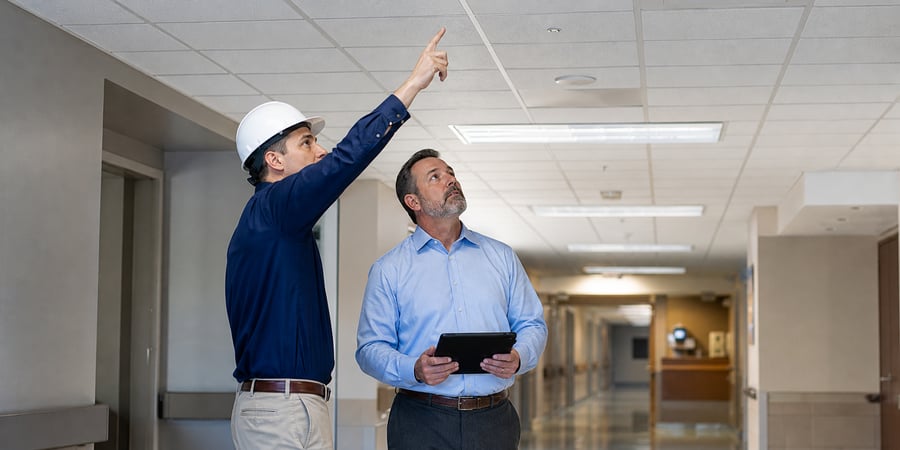
Nobody plans to put up the wrong infection control risk assessment (ICRA) barrier. On an active hospital floor, a containment setup can look complete from the corridor long before the work inside it is actually under control. From the corridor, the barrier is up, a machine is running, and someone is already cutting. Patients are in the rooms next door, and the crew has a window to get the work done before the next shift change or the next trade is waiting in the hall.
That window is real, and it's also how a wrong barrier stays up for the whole shift. Someone grabs the cart from the last job because the opening looks "about the same size." Someone cuts a slit in the plastic so people can pass through, because the crew is in and out all day. A ceiling tile comes down before the zone is closed, or the machine gets switched on before anyone has walked where the air is going. None of those moves feels like a failure while it's happening. The corridor stays calm, nothing visible has crossed the line, and the job keeps moving.
The gap that matters is the one between a setup that looks complete and the barrier this particular job calls for. You can see that difference, and you can correct it, while the barrier is going up. Once the same shortcut has been used on a few openings, it starts to look like the normal way the work gets done.
Why the Corridor Stays Calm While the Barrier Is Wrong
Active floors judge containment by whether the corridor stays quiet. Patients need care, the schedule has a deadline, and a gap that doesn't put dust in the hall rarely stops the shift. If the barrier looks finished, the crew moves on to the work inside it. The same shortcut then shows up at the next opening, because nothing about the last one announced itself as incomplete.
That's how a dust containment strategy slips. The seven signs a dust containment strategy is already failing are what the floor looks like after those shortcuts have had time to settle in: seals treated as "close enough," pressure assumed because the machine is running, and dust in the hall treated as a housekeeping problem. This article is about the earlier moment, while the barrier is going up and the crew can still change it. The five failures below are where those shortcuts usually start.
Five Ways an ICRA Barrier Fails
1. The Barrier Doesn't Match the ICRA Class
The crew pulls a containment cart, hangs plastic, or sets panels because that's what fit on the truck. Sometimes they copy the setup from a job that looked about the same size, especially when the person running the work has built this kind of opening for years. That experience is worth keeping. It still isn't a substitute for the class, because what you can't see from the cart is who is in the rooms around the work, including above, below, and down the hall.
A short repair in an office corridor and a multi-day opening beside an ICU are not the same barrier, even when the hole in the wall looks familiar. The class comes from the kind of work and from the people nearby. Dust that would be a nuisance in an empty office is a different problem beside patients who can't leave the unit. The facility's signed ICRA permit sets the standard for the space. A containment cart such as the HEPACART® Classic, or rigid panels such as STARC®, is the right tool only after that assessment confirms it fits the class. If the scope changes after the permit is signed, the work stops long enough to look at the class again before the crew keeps going.
2. The Barrier Has No Controlled Entry for Crew and Materials
People, carts, and materials have to get in. The failure is using the containment wall as the door. The plastic gets slit, a panel gets swung aside, or a zipper stays open because the crew is in and out all day, and every trip becomes an opening that doesn't close behind them. From the hall it can look like a barrier. Air and dust have a path each time someone passes through.
On a lower class, the control may be a closed door and a planned way in and out. Under ASHE ICRA 2.0, Class III can be that closed door, plastic containment, or a small contained area held neutral to negative. Class IV and Class V are where entry becomes its own space. An anteroom sits at the entrance, large enough to stage a cart and let people clean up before they step back onto the floor. Air moves from the occupied side, through that entry, and into the work zone, and shoe covers come off before anyone leaves. On a small Class IV job, a containment unit that fully encloses the work can be that controlled entry, when the permit allows it. In each case, people and materials don't travel through a cut in the barrier.
When the class calls for that separate entry, it has to be built as its own space rather than cut out of the wall. AnteRoom is one way to put a temporary anteroom at the opening, so the barrier stays closed while people and carts get through. Whether a staged entry is required comes from the ICRA classification, not from whatever barrier material happens to be on the truck.
3. Ceiling and Wall Openings Happen Before the Barrier Is Sealed
A tile comes down, or a penetration gets cut, while the work zone is still open to the corridor or the room next door. The crew is getting a look, or demolition starts while the plastic is still going up. Dust from that opening has a path out, and the space above the ceiling is a path into other rooms. People on the other side of that path don't have to see the dust for it to reach a patient-care area.
Popping a single ceiling tile for a "quick look" is a different task from opening the ceiling to pull cable, reach a chase, or start demo. Once the ceiling is part of the work, the barrier is closed first, and it reaches the deck above, with penetrations sealed. The plastic or the hard wall is finished so dust can't leak at the floor, the ceiling, or a gap that opens when someone brushes past. Negative pressure comes after that barrier is actually closed, not while the corridor is connected to the space above the ceiling. If the ceiling is opened first, the crew is working in the path that connects rooms, and the containment hasn't started yet.
4. Negative Air Exhausts to an Unverified Path
The machine is on, and from the hall "it's running" reads as containment. The hose may be aimed into an occupied room, a return, a bathroom exhaust, or back toward the clean side of the barrier. The unit is running, and the air is going to the wrong place. A running machine and a confirmed path are two different things. The miss is usually that nobody walked the discharge before the cutting started, because the sound of the unit was enough to move the job forward.
Before any dust-generating work, someone needs to see where the air leaves. The work zone should sit negative to the spaces beside it. Air pulled out of the zone should pass a HEPA filter before it can reach patients, and it shouldn't be dumped into a shared return or a shared exhaust. The post on how negative air pressure works in healthcare construction covers how that pressure differential is established and maintained across a sealed perimeter. In practice, that means walking the exhaust path and confirming negative pressure at the barrier with a manometer or a continuous differential monitor before anyone makes the first cut. On most healthcare jobs that reading is about -0.01 to -0.03 inches of water column. The signed permit sets the number for this opening.
A negative air machine such as HEPAFORCE® doesn't correct a hose pointed into the wrong room. It helps when the barrier is already closed and someone has walked the discharge. Turning the unit on is the step that comes after that check, not the check itself.
5. The Barrier Comes Down Before Cleanup and Clearance
Plastic, panels, or the cart come out while cutting is going on, or while dust is still in the air inside the zone. The next trade is waiting in the hall, and taking the barrier down feels like finishing. It also hands that trade an opening that looks clear while the zone is not. The dust that was just contained is still in the air the barrier was holding, and removal itself kicks more of it up if the cleanup hasn't happened yet.
The barrier stays through the dusty work, and it stays through cleanup. Negative air stays running while that dust clears, and it stays on until the people who can release the precautions say the zone is ready. On higher classes, that release is an inspection: infection prevention, or their designee, and engineering sign off, and it isn't a crew call at the end of the shift. Removal gets the same care as the setup, because it's a dusty moment of its own when it's rushed. Before the barrier goes up, the crew agrees on who cleans, who confirms the air has cleared, and who is allowed to call the zone done.
Who Decides Before the Crew Reaches the Doorway
A careful build can still be the wrong barrier if the class was never confirmed. The contractor builds what the permit describes. The facility person who signed the ICRA owns the class, the check of the rooms around the work, and the call to stop if the scope changes. Infection prevention belongs in that conversation when the class, the entry, or the release of the barrier is in question.
Those decisions belong before anyone is standing at the opening with a tool in hand. A debate in the doorway means one of the failures has already started, because the crew is then choosing the barrier while the window is closing. Once the class, the entry, and the release are settled, the build can follow a set sequence, and how to set up containment in an active facility is that sequence. It's useful after the class is known. It doesn't replace the decision about which barrier this job requires.
If you're holding the permit, the class needs to be readable before the crew arrives. If you're holding the tools, you build what that class describes, and you stop when the work stops matching it. You don't have to settle the whole ICRA in the corridor. You do need to know which piece is yours before the cart comes out of the truck.
A Short Repair and a High-Risk Renovation Call for Different Barriers
A lower class can be a closed door and tight control of dust. A higher class beside a vulnerable unit can mean a sealed wall, a separate entry, and filtered exhaust that stays on through cleanup. Building the wrong one takes longer. The crew takes it down and builds it again while the corridor stays open and patients are next door. Once dust is already outside the zone, what happens when dust escapes containment traces where those particulates travel, and what it costs when they reach the rooms the barrier was supposed to protect. The decision that prevents that path is the one made before the first opening, not the one made after dust is in the hall.
Normalized Failure vs. the Pre-Job Standard
| Failure Point | Normalized Failure Pattern | Verified Pre-Job Standard |
|---|---|---|
| ICRA classification | Crew builds with what's on the cart or copies the last job | Class and adjacent patient risk are confirmed on the permit before deployment |
| Zone entry and exit | Crew and materials pass through a slit or propped zipper in the plastic | Entry is a dedicated step: an anteroom or full-enclosure cart when the class requires it |
| Ceiling and wall access | A tile is pulled or a wall is opened while the perimeter is still open | Perimeter is sealed to the deck and penetrations are closed before any opening is made |
| Negative air exhaust | Machine is switched on while discharging into a return or unverified space | Exhaust path is walked, HEPA-filtered, and verified with a pressure reading before cutting |
| Barrier takedown | Containment comes down as soon as cutting stops so the next trade can start | Barrier and negative air stay active through HEPA cleanup, settling time, and IP sign-off |
| Failure mode | Silent exposure in adjacent rooms or a stopped-work finding mid-shift | Caught and corrected during the pre-job walk, before the first tile moves |
The pattern across the table is the same one you can see from the hallway. Each failure looks reasonable while the shift is moving, and each one is prevented by a check that happens before the work, rather than after dust shows up outside the zone.
Common Questions
Why isn't an experienced foreman's judgment enough to pick the barrier on-site? Experience tells a crew how to build an opening cleanly, not which patients are on the other side of the wall or above the ceiling deck. Two repairs that look identical from the ladder can sit in completely different risk classes depending on the units next door. The ICRA accounts for clinical exposure that isn't visible from the corridor.
Does a running negative air machine mean the barrier is working? It means the machine is on. The barrier is working when the zone is sealed, the entry is controlled, and the air leaving that zone is verified with a pressure reading and a confirmed exhaust path. A hose pushed into a shared return, or a zipper left open, can undo a unit that is running exactly as designed. The sound from the hall is not the verification.
Can a short repair skip the barrier the ICRA called for? A short job can land in a lower class, and that decision is made during planning and written on the permit. Skipping controls that the assigned class already requires is a different decision, even when the repair looks small enough to finish in an hour. If the work turns out dustier, longer, or closer to vulnerable patients than the permit assumed, work pauses until the classification is reviewed.
Who owns a wrong barrier, the contractor or the facility? The facility owns the ICRA and the class. The contractor owns building what that class describes. Infection prevention and engineering own the inspection before higher-class precautions come down. When a barrier doesn't match the class, either the class was never confirmed ahead of time or the scope changed and the work didn't stop. Those are different failures, and they sit with different people, which is why the doorway is a poor place to sort them out.
How is this different from finding dust in the corridor after the fact? Dust in the corridor is a lagging indicator. These five failures are how airborne particulates get a path out of the work zone in the first place. Catching them while the barrier is going up prevents the exposure, rather than investigating it after the shift is over.
The Check Before Work Starts
Use the pre-job walk to settle the five lines before anyone pulls a cart.
- Confirm the class for this job, including the rooms around the work, and check that it matches what is about to happen.
- Confirm that entry is controlled, and that on a higher class it is an anteroom or a unit that fully encloses the work.
- Leave ceiling and wall openings closed until the barrier is finished, and bring the barrier to the deck if the ceiling will be opened.
- Walk the exhaust path, keep discharge out of a care area, a return, or a shared exhaust, send air leaving the zone through a HEPA filter, and confirm the pressure reading before anyone cuts.
- Agree on removal before the barrier goes up: who cleans, who keeps negative air running after the dusty work, and who inspects before the barrier comes down.
If any of those lines is still a debate when the crew reaches the opening, the work waits on that line. Settling it in the doorway means the barrier is already being chosen under the clock.
Before the Next Opening
The crews who keep containment right on a busy floor are not the ones making these calls while a saw is already out. The class is settled, the way in is a real entry rather than a cut in the wall, someone has walked the discharge, and the takedown rule is agreed before the cart comes out. The window is still there. It gets used on a barrier that matches the work, instead of on a setup that only looks finished from the hall.
That barrier is there to protect patients, staff, and the people doing the work. A setup that matches the class is also the one the crew doesn't have to tear down and rebuild in the middle of the shift, with the corridor open.
The HEPACART® team works with healthcare facilities and construction groups to match mobile containment carts, anterooms, and barrier walls to the classifications, room types, and schedule windows in front of them. If you want to review where those handoffs sit before the next opening goes up, start a project assessment, talk with the HEPACART team, or request a quote for your upcoming work.
Share this
