
Share this
by HEPACART on Jul 27, 2026
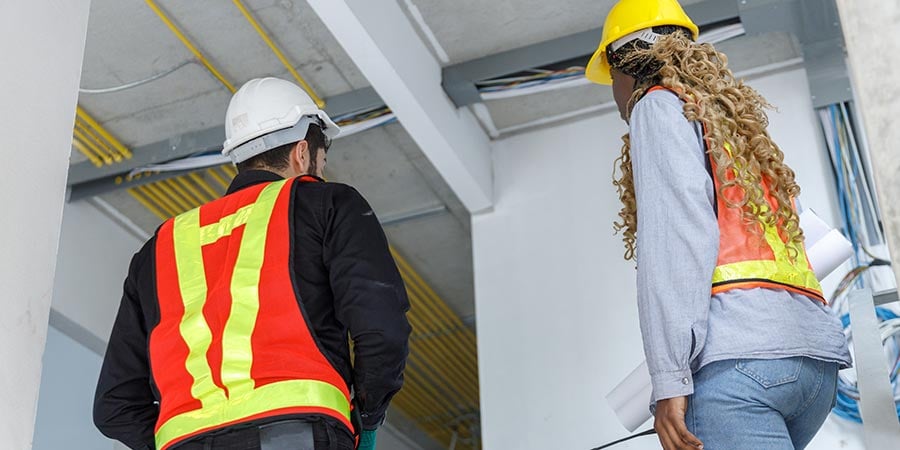
Nobody wakes up and decides to run a bad dust containment system. Failures in active healthcare facilities almost never happen that way. They happen gradually, one shortcut at a time, until the shortcuts become the process. A barrier that isn't fully sealed becomes "close enough." A negative air machine that's running but never verified becomes "probably fine." A crew that sets up differently than the last crew becomes "just how that team does it."
None of these moments feel like a failure when they happen. Each one gets rationalized, absorbed, and normalized because the job kept moving and nothing visibly went wrong that day. The problem is that a dust containment system doesn't fail on the day corners get cut. It fails weeks or months later, when the accumulated gaps finally line up with the wrong patient, the wrong inspection, or the wrong moment.
This article is built around a specific idea: if you are managing infection control, facilities operations, or construction in a healthcare environment, you have almost certainly already seen some of these signs. The goal here is not to introduce fear. It's to help you name what you may already be sensing so it can be addressed before it becomes an incident, a citation, or a shutdown.
Why Containment Failures Get Normalized Before They Get Noticed
Active healthcare facilities operate under constant pressure to keep moving. Patients still need care. Procedures still need to happen. Projects still have deadlines. In that environment, small containment gaps rarely stop the job, so they rarely get flagged.
This is the core mechanism behind normalized failure. A dust containment system is judged by whether the job got done, not by whether every seal, every airflow reading, and every setup step matched the standard every single time. As long as nothing visibly escapes containment, the process gets treated as working, even when it's held together by individual effort rather than a repeatable system.
The CDC's guidance on environmental infection control makes clear that construction and renovation activity can measurably increase airborne spore counts in healthcare settings, and that risk grows specifically in the gap between assessment and consistent execution. That gap is where these seven signs live.
The 7 Signs Your Dust Containment System Is Already Failing
1. Containment Barriers Get "Close Enough" Instead of Fully Sealed
If your team has a version of "that's tight enough" for sealing plastic sheeting, taping seams, or closing gaps around doors and ceiling penetrations, that's not a minor detail. It's a sign the containment barrier is being judged visually instead of verified physically. A barrier that looks sealed and a barrier that is sealed are not the same thing, and the difference only shows up when dust actually tries to move through it.
2. Different Crews Set Up Containment Differently on Similar Jobs
When two crews handle comparable jobs and produce two different setups, that's variability, not flexibility. It usually means the process depends on who happens to be running the job rather than on a standardized method. This is one of the most common and most overlooked failure points, and it's the same variability at the root of what helps versus slows down OR turnover, where inconsistent setup habits create downstream delays that have nothing to do with the actual construction work.
3. Negative Air Pressure Is Assumed, Not Verified
Running a negative air machine is not the same as confirming the pressure differential is actually correct and holding throughout the job. If pressure is checked once at setup and never again, that's a single data point being treated as continuous assurance. How healthcare construction negative air pressure works covers why airflow direction and pressure differential need to be confirmed as an ongoing condition, not a one-time checkbox.
4. Dust Outside the Containment Zone Gets Treated as a Minor Cleanup Issue
If visible dust or debris outside the containment barrier is handled with a quick wipe-down instead of a review of what failed in the setup, the team has quietly redefined the acceptable outcome. A trace of dust in a corridor near patient areas is not a housekeeping event. It's evidence that containment integrity broke down somewhere, and that failure point needs to be found before the next job, not just cleaned up after this one.
5. HEPA Filters Run Past Their Service Life Without Anyone Tracking Hours
Filtration equipment loses efficiency as it loads with particulate, and that decline doesn't announce itself. If filter change intervals are based on memory or "it still seems to be running fine" instead of tracked runtime hours, the containment system's actual filtration efficiency is unknown. Equipment like HEPAFORCE air scrubbers is designed around measurable performance for exactly this reason. Filtration should be confirmed, not assumed.
6. Staff or Patient Complaints Are the Only Signal Anyone Gets
If the first indication of a containment problem is someone reporting dust, odor, or noise, the system has no early warning built in. Complaints are a lagging indicator. By the time someone notices and reports it, the exposure has already happened. A dust containment system that only gets feedback from complaints is a system with no verification step running in real time.
7. There's No Documentation to Show How Containment Was Verified on a Specific Job
If someone asked today, "show me how you confirmed containment held on the third-floor renovation two weeks ago," could your team produce it? For many facilities, the honest answer is no. Documentation often exists for the initial infection control risk assessment (ICRA) but not for the ongoing verification during execution. That gap is exactly what the true cost of construction dust control gaps walks through: the cost of a containment failure is rarely just the incident itself. It's the inability to defend the process afterward.
What These Signs Have in Common
Look closely at all seven, and a pattern emerges. None of them are dramatic. None of them look like a crisis in the moment. Each one is a small, quiet substitution: assumption instead of verification, memory instead of tracking, "it worked last time" instead of a repeatable standard.
That pattern matters because it means the fix isn't more urgency or more warnings. It's removing the substitutions. A dust containment system holds up when the physical setup, the equipment, and the verification process don't depend on any one person remembering to do it right that day.
Normalized Failure vs. a Verified Containment Process
| Factor | Normalized Failure Pattern | Verified Containment Process |
|---|---|---|
| Barrier sealing | Judged visually, "close enough" | Confirmed against a physical standard every setup |
| Crew consistency | Varies by who's on the job | Standardized regardless of crew or site |
| Pressure differential | Checked once, assumed to hold | Monitored continuously through the job |
| Dust outside containment | Cleaned up, not investigated | Treated as a failure point requiring root cause review |
| Filter management | Based on memory or feel | Tracked by runtime hours and service intervals |
| Early warning | Complaints from staff or patients | Built-in verification before issues reach occupied space |
| Documentation | Exists for the ICRA, not execution | Exists for setup, verification, and completion |
This comparison isn't about placing blame on facilities or construction teams. Most of these gaps exist because the system was never designed to prevent them, not because anyone is being careless.
Where Standardized Equipment Fits Into the Fix
None of these seven signs get resolved with more training alone, because training only works if the physical process supports it. Standardized, repeatable equipment narrows the number of ways a job can go wrong, which is the same logic behind standardizing infection control risk assessment across teams.
Mobile HEPA-filtered containment carts, such as HEPACART Classic, and repeatable barrier systems like STARC LiteBarrier and RealWall, reduce the number of decisions a crew has to get right from memory. For jobs that require staged access and controlled entry, systems like AnteRoom build the containment sequence into the equipment itself rather than relying on a crew to recreate it correctly every time.
The goal isn't to replace human judgment. It's to remove the number of places where human judgment is the only thing standing between a compliant job and a containment failure.
Common Questions
If we haven't had an incident, does that mean our dust containment system is working? Not necessarily. The absence of a visible incident often means the gaps haven't lined up yet, not that they don't exist. Many of the seven signs above can persist for months without causing a reportable event, right up until the day they do.
Which of these signs is the highest priority to fix first? Start with whichever sign shows up most often across your projects. For many facilities, that's inconsistent crew setup or the absence of ongoing pressure verification, since both of those directly affect whether containment holds throughout the job rather than just at the start.
Does this mean our current process is inadequate? Not automatically. It means point-in-time compliance and daily execution are two different things, a distinction covered in more depth in what happens when dust escapes containment in a hospital. Recognizing where the gap sits is what allows a team to close it before it turns into a finding.
Can standardizing equipment really prevent all seven of these signs? Standardized equipment addresses several of them directly, particularly barrier consistency, filtration tracking, and staged containment access. It doesn't replace the need for verification and documentation, but it significantly reduces the number of variables a team has to manage correctly on every job.
Deciding Where to Look First
A practical way to start:
- Walk through your last three completed jobs and ask whether the containment setup was identical across all three, or whether it varied by crew.
- Check whether pressure differential was verified more than once during each job, or only at initial setup.
- Review whether filter service intervals are tracked by hours or by habit.
- Ask whether your team could produce containment verification records for a specific job from the past month.
- Prioritize whichever gap shows up most consistently, since that's the one most likely to be normalized rather than occasional.
This kind of internal review is the same approach outlined in healthcare compliance training and standardized infection control systems, which looks at how training and equipment standardization need to work together rather than as separate fixes.
Where This Leaves You
None of these seven signs mean your team is failing at its job. They mean your dust containment system, like most systems built under time pressure, has accumulated small substitutions that feel manageable individually but add up to real exposure over time.
The facilities that stay ahead of this aren't the ones with perfect processes on paper. They're the ones willing to look honestly at which of these seven signs show up in their own operations and address the physical setup and verification gaps before an incident forces the issue. HEPACART's work with hospital and patient protection and multi-site facilities services is built around exactly this kind of standardization, closing the gap between what a process is supposed to do and what actually happens on the job.
If any of these seven signs sound familiar, that recognition is the useful part. Talk with the HEPACART team about where standardized containment would close the biggest gap in your current process, or explore the downloads and guides library for practical resources your team can use to run this kind of internal review on your own.

Share this
