
Share this
by HEPACART on Jan 26, 2026
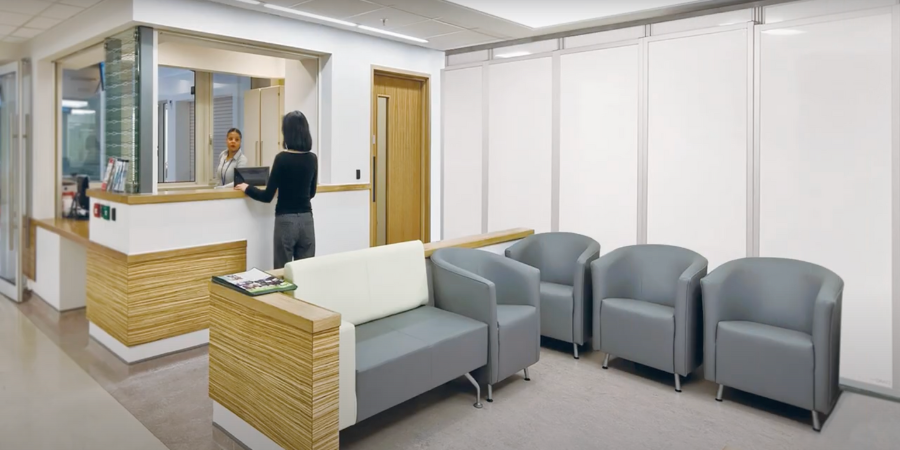
Renovation work in healthcare facilities has always required a careful balance. Buildings need updates to support new technology, higher patient volumes, and changing regulatory standards. At the same time, infection control expectations continue to rise, which leaves very little margin for error when work happens near sensitive populations.
For years, those two realities coexisted, but only barely. As compliance expectations tighten and patient experience becomes a priority, facility managers are seeing the early signs that traditional containment methods are no longer keeping up. Maybe negative air isn’t reliable or construction dust travels farther than it should.
In 2026, temporary hard wall systems have moved from a nice option to the standard of containment that modern teams rely on. They are reshaping what effective infection control looks like during construction. For you as a facility manager, those changes make all the difference in how successful you can be in your job with the equipment that your facility invests in.
4 Problems with Traditional Containment Methods
For a long time, disposable plastic barriers were the default option for short-term containment. They looked inexpensive and simple to install, but in active healthcare environments they have become a growing liability.
Here is why they create problems:
-
They Are Prone to Damage and Leaks
Plastic tears easily in high-traffic corridors and critical care areas. A small puncture is enough to interrupt negative air or allow dust to drift into adjacent spaces. These weak points usually show up during busy phases of a project, which is when there is the least time to stop and repair them.
-
They Require More Labor Than Most Teams Expect
Taping, framing, trimming, and constant adjustments take time. Teardown takes just as long. When multiple phases are happening across an active facility, the extra labor hours stack up fast.
-
They Create Unnecessary Waste and Recurring Costs
Every project phase ends with piles of plastic and tape headed for the dumpster. Facilities that renovate regularly feel the financial and environmental cost of this cycle.
-
They Make Stable Infection Control Difficult
Maintaining consistent pressure is one of the first issues that appears with plastic barriers. A loose seam or a poorly sealed corner forces teams to troubleshoot airflow instead of keeping the project moving.
None of these issues are new, but more facilities are realizing how much they contribute to delays, staff fatigue, and compliance concerns.
Welcome to a New Era of Infection Control
Across the industry, hospitals are moving away from disposable containment and choosing durable, modular systems that actually support their plans for long-term renovation work. Facility teams have spent years dealing with weak, inconsistent solutions, and modular systems finally solve the problems they have been raising.
Here is what sets modern infection control systems apart:
- Reusable design that reduces waste and cost: Teams move the same panels from unit to unit and project to project. They stop tearing down materials and throwing them away after every phase, which cuts waste, lowers long-term spending, and keeps setups consistent across the facility.
- Durable materials built for daily use: High-strength panels hold up to cleaning chemicals, foot traffic, equipment movement, and repeated project cycles. They do not tear or sag, and they do not require patching. They maintain their seal under constant use.
- Precision fit that maintains airtight containment: Effective infection control starts with a sealed environment. Modular systems lock into place and keep pressure stable, even during extended negative-air operation. This supports ICRA requirements and helps teams maintain reliable infection control heading into 2026.
- A professional appearance in patient-facing areas: Renovation often happens near active care units. Hard wall systems create a clean, finished surface that blends into the environment. They reduce the visual disruption and noise that come with plastic barriers and create a more controlled, reassuring experience for patients and staff.
Meet the STARC® Systems Temporary Wall Barriers
If you want a cleaner, more consistent approach to containment than plastic or other disposable options, STARC Systems offer a few high-quality choices depending on what your facility needs most.
STARC® Systems RealWall
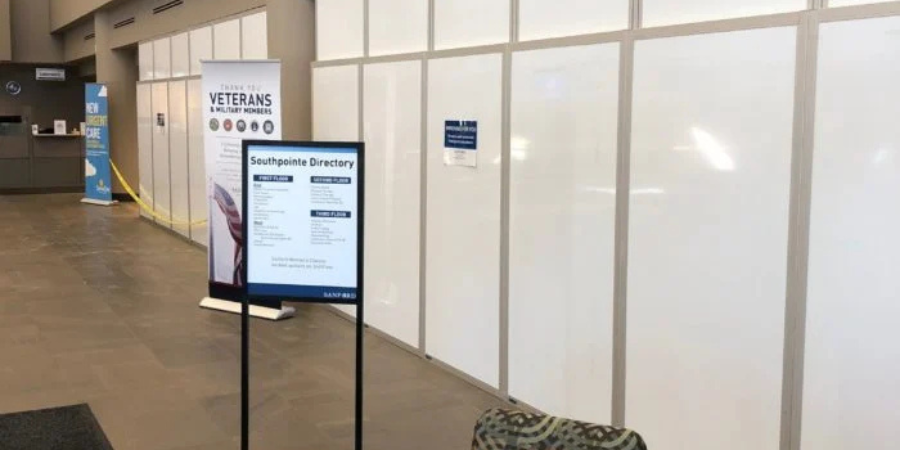
RealWall gives facility teams a sturdy, airtight barrier that performs like a permanent wall without the construction time. It holds pressure reliably, reduces noise, and blends into active patient areas so renovations feel controlled instead of chaotic.
Teams choose RealWall for longer projects or any environment where appearance, stability, and consistent airflow matter. It stands up to heavy foot traffic, routine cleaning, and extended negative-air operation, which makes it a dependable option for high-demand renovation work.
Discover more about STARC RealWall.
STARC® Systems LiteBarrier
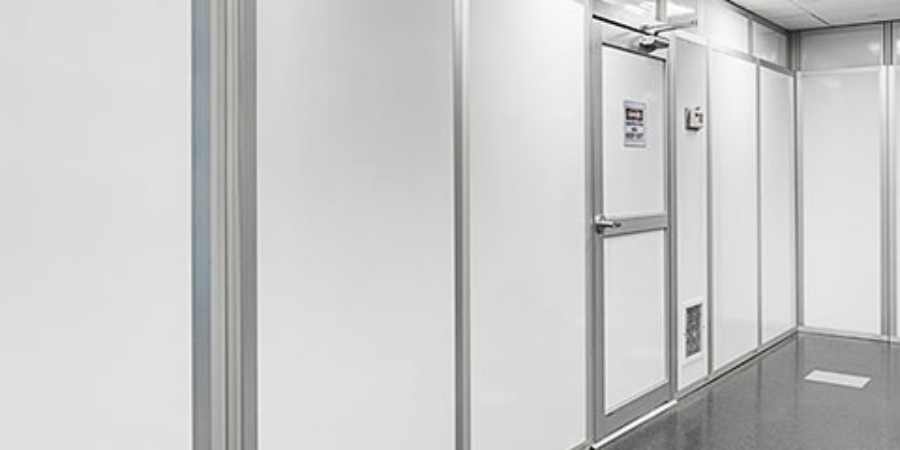
LiteBarrier offers the same clean, airtight containment approach as RealWall but in a lighter, more portable design. It sets up quickly, moves easily, and keeps dust and noise under control in areas where teams need a fast turnaround.
Facility managers rely on LiteBarrier for shorter renovation phases, maintenance work, or projects that shift between locations. It delivers consistent containment without slowing the schedule, which makes it an efficient choice for day-to-day renovation needs.
Temporary Wall Systems Improve Safety and Efficiency
The right containment system supports infection control, but it also changes how efficiently teams can work. Facility managers consistently point to three areas where modular systems make a measurable difference.
Faster Setup and Teardown
Modular systems lock together quickly and hold their alignment. Teams spend less time framing, sealing, and reworking, and more time advancing the actual renovation. When multiple projects run at the same time or in tight phases, this time savings adds up fast.
Better Control of Airflow and Contamination
Airtight hard walls and negative-air equipment create stable pressure environments. When pressure stays consistent, dust stays contained and patient safety improves. STARC panels also connect directly with HEPACART mobile containment units, which gives teams full, floor-to-ceiling coverage during above-ceiling work.
Reduced Noise and Better Patient Experience
Noise remains one of the biggest complaints during healthcare construction. Modular systems absorb sound far better than plastic, which makes nearby patient areas and staff workspaces quieter and more comfortable.
Modular Barriers Provide Value and Sustainability
Most facility teams start looking at temporary wall systems because they want stronger infection control, but the long-term value becomes obvious once the panels go into regular rotation. Disposable materials look inexpensive at first, yet their cost grows with every installation, repair, and teardown.
Reusable systems eliminate those repeated expenses and often pay for themselves quickly, especially in hospitals that renovate frequently or run projects year-round. They also reduce the amount of single-use plastic that ends up in dumpsters, which helps facilities hit sustainability goals without sacrificing performance.
Patients and staff notice the difference too. A clean, stable hard wall system creates a more professional environment and avoids the chaotic look that comes with plastic sheeting.
The Future of Healthcare Renovations in 2026
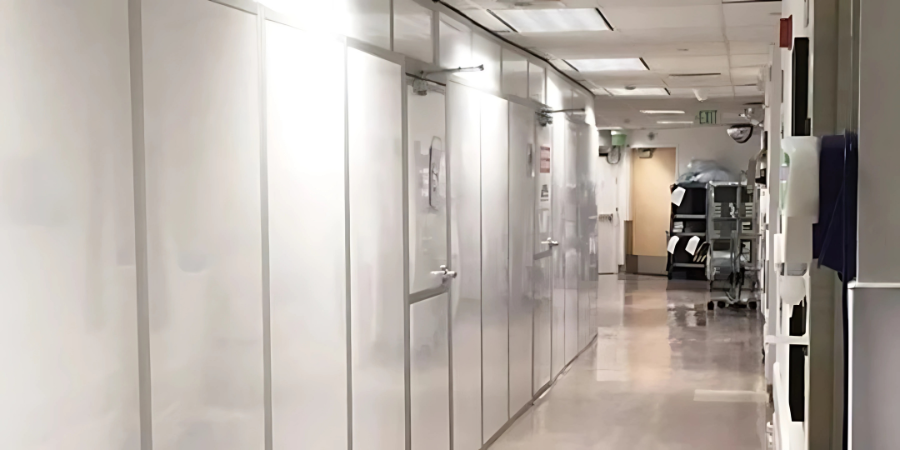
As we look toward 2026, it is becoming easier to see where healthcare renovations are headed. A few trends are showing up across almost every facility we talk to, and planning for them now will save a lot of stress later.
More hospitals are starting to use real-time pressure and air quality monitoring. Instead of checking readings a few times a day, teams want a clear picture of how their containment is performing around the clock. Because of that shift, modular wall systems that can easily accommodate monitoring ports or integrated sensors will become the more practical choice.
Flexibility is going to matter even more too. Renovation timelines change, units shift, and surge periods create new demands with very little notice. When that happens, teams need containment that can move, reconfigure, or scale without slowing the project down. Modular systems make those adjustments much easier than plastic ever could.
Regulatory pressure is increasing as well. ICRA requirements are tightening, and infection prevention teams are paying closer attention to airflow stability, sealing quality, and dust migration. That trend is not going away. Disposable barriers struggle the most under this level of scrutiny.
It all comes down to one simple reality; facilities need containment that stays reliable, adapts quickly, and supports long-term use. Temporary hard wall systems check those boxes and give teams a more predictable, stable way to keep renovations moving while protecting patients and staying ahead of compliance issues.
Set the Gold Standard for Healthcare Renovations
Modern healthcare renovations need containment that protects patients, keeps pressure steady, and lets your team focus on the work instead of fixing barriers all day. Modular temporary wall systems deliver that level of reliability, which is why so many facilities now treat them as the standard, not an upgrade.
If you are planning renovation work in 2026, these systems help you stay ahead of infection control, reduce daily friction for your team, and keep projects moving without constant troubleshooting.
If you’re looking for a clearer view of how filtration fits into your containment decisions, the HEPA vs. ULPA Guide is a practical next step to making 2026 your facilities’ safest year yet.

Share this
