
Share this
by HEPACART on May 04, 2026
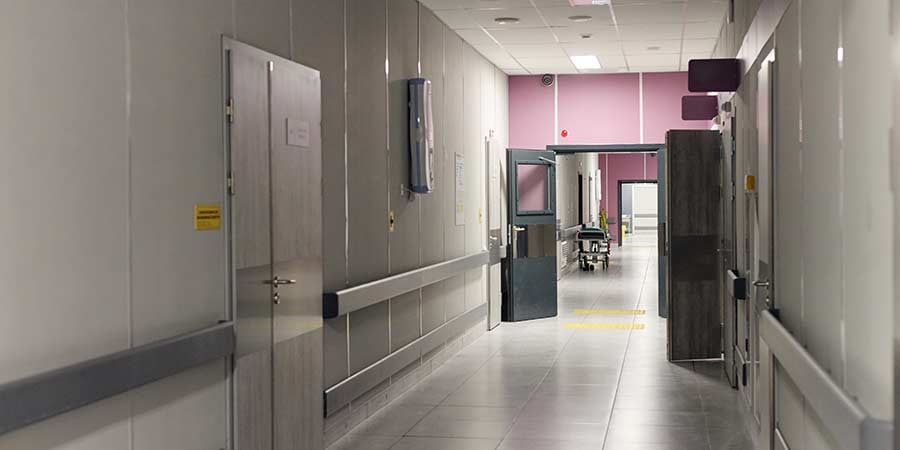
Construction inside active healthcare facilities forces a constant tradeoff between flexibility and control. Teams need to isolate work areas quickly, maintain airflow integrity, and keep projects moving without introducing infection control risk. That is where the decision between a temporary wall system and a built-in containment approach becomes critical.
On paper, both options serve the same purpose. They create a barrier between construction activity and occupied spaces. In practice, they behave very differently under real conditions.
This is not a product comparison. It is an operational decision that affects containment reliability, compliance defensibility, labor burden, and project timelines.
Understanding where each approach works and where it fails is what allows teams to choose the right system for the environment they are operating in.
The Real Problem: Containment Has to Hold Under Pressure
In active healthcare environments, containment is not static. It is constantly under stress from multiple variables that are outside of any single team’s control. What looks like a sealed space on day one can quickly degrade as work progresses.
Some of the most common pressure points include:
- Airflow changes caused by HVAC systems
- Door openings and foot traffic
- Above-ceiling work and pathway exposure
- Multiple trades entering and exiting work zones
- Schedule pressure forcing faster setup and teardown
Each of these factors introduces variability. Over time, that variability compounds.
The issue is not whether a barrier exists. The issue is whether that barrier maintains containment integrity consistently across changing conditions. This is where most failures occur.
Temporary setups often rely on execution. Built-in systems rely on structure. Neither is inherently better in every scenario, but both fail when used outside their ideal conditions.
Understanding the Two Approaches
What Is a Temporary Wall System?
A temporary wall system is a portable containment solution designed to create sealed work zones quickly. These systems are modular, reusable, and built to adapt to real-world environments where conditions are constantly changing.
They are commonly used for:
- Short-term projects
- Emergency maintenance
- Phased construction work
- Work in tight or irregular spaces
What makes temporary systems valuable is not just portability, but speed. Teams can deploy containment without waiting on additional trades or construction steps. That speed directly impacts project timelines, especially in environments where delays cascade into other departments.
However, that same flexibility introduces dependence on proper setup and consistent use.
What Is a Built-In Containment System?
Built-in containment refers to fixed, constructed barriers such as framed walls, drywall enclosures, or semi-permanent partitions.
These systems are typically used for:
- Long-duration projects
- Large-scale renovations
- Areas with consistent, repeatable work
- Spaces where structural control is prioritized
Unlike temporary systems, built-in containment becomes part of the environment. It creates a more stable and predictable boundary, which reduces the need for constant adjustment.
The tradeoff is time and effort. These systems require coordination, labor, and upfront planning, which can slow down initial project phases.
Side-by-Side Comparison: Where Each Approach Fits
| Factor | Temporary Wall System | Built-In Containment |
|---|---|---|
| Setup Time | Fast deployment, often same day | Slower, requires construction |
| Flexibility | Highly adaptable to changing layouts | Limited once installed |
| Consistency | Reliable when setup is standardized and maintained | Reliable when the layout remains fixed |
| Airflow Control | Works with negative air, HEPA filtration, and monitoring | Works with negative air, HEPA filtration, and monitoring |
| Labor Requirement | Lower upfront labor, with regular inspection and maintenance | Higher upfront labor, with fewer layout adjustments |
| Best Use Case | Short-term, phased, mobile, or changing work zones | Long-term, fixed, stable work zones |
| Risk Profile | Reliable when regularly inspected and maintained | Reliable when properly constructed and left in place |
This comparison highlights a key reality. The decision is not about which system is better overall. It is about which system aligns with the type of work being performed and the level of control required.
Temporary systems allow teams to move fast and adapt. Built-in systems reduce uncertainty but require more commitment upfront.
Where Temporary Wall Systems Work Well
Temporary wall systems are effective when the environment demands adaptability and speed. In many healthcare projects, conditions change faster than permanent solutions can keep up.
1. Short-Duration Projects
When work is measured in days or a few weeks, building permanent containment rarely makes sense. The time required to construct and remove built-in barriers often outweighs the benefit.
Temporary systems allow teams to:
- Set up quickly
- Minimize disruption to surrounding areas
- Avoid unnecessary construction labor
In these cases, the ability to deploy containment immediately is more valuable than long-term stability.
2. Phased or Mobile Work Zones
Healthcare construction is rarely confined to a single static location. Work often moves from room to room, floor to floor, or department to department.
Temporary systems allow:
- Rapid relocation
- Consistent containment across multiple zones
- Reduced downtime between phases
This is especially important when teams are working overnight or between operational windows. Built-in systems cannot keep pace with this type of movement without creating delays.
3. Emergency or Reactive Work
Unplanned maintenance and repairs introduce urgency. There is no time for extended planning or construction.
Temporary systems provide:
- Immediate deployment
- Minimal planning requirements
- Fast response without compromising initial containment
In these situations, speed is not just a benefit. It is a requirement to prevent further operational disruption.
Where Temporary Wall Systems Need More Oversight
Temporary wall systems perform best when they are treated as active containment controls, not passive barriers. In more complex healthcare projects, the system itself is not usually the issue. The bigger risk comes from skipped inspections, unmanaged access points, changing airflow conditions, or a lack of clear ownership after setup.
1. Long-Duration Projects
Temporary wall systems can support longer projects, but only when they are maintained exceptionally well throughout the full duration of the work. For projects that extend beyond a short-term phase, especially projects lasting several months or longer, teams need to treat the temporary containment system as an active control that requires inspection, adjustment, and accountability.
Over time, any temporary setup can experience small changes that affect performance:
- Seals may loosen
- Panels may shift
- Access points may see repeated wear
- Teams may modify configurations
- Oversight may become inconsistent
This does not mean temporary wall barriers are the wrong choice for longer projects. It means they need a clear maintenance plan, regular containment checks, and disciplined use. When those steps are in place, temporary systems can remain effective. When they are not, small changes can compound into containment variability.
2. High-Traffic Environments
High-traffic environments require more disciplined containment management because every entry and exit affects the work zone. This is true for temporary wall systems and built-in containment, but temporary systems often need more frequent checks because they are designed to support changing project conditions.
In these areas, teams should pay close attention to:
- Door use and access control
- Pressure relationships
- Seal condition around panels and entry points
- Trade movement in and out of the space
With the right access plan and regular inspection, temporary wall systems can continue to support reliable containment in active corridors, phased work zones, and occupied facility areas.
3. Complex Airflow Conditions
Temporary wall systems, like built-in containment, need to be paired with the right airflow strategy. The barrier defines and separates the work zone, while negative air machines, HEPA filtration, and pressure monitoring help control how air moves through the space.
That is why temporary containment should be evaluated alongside systems like negative air pressure in healthcare construction. When airflow is planned and monitored correctly, temporary wall systems can support strong containment performance in active healthcare environments.
The key is making sure teams account for:
- Pressure relationships between the work zone and adjacent spaces
- HEPA-filtered air movement
- Access points that may affect pressure stability
- Inspection routines during each project phase
This keeps the conversation honest without making the temporary wall system sound like the weak point.
Where Built-In Systems Work Well
Built-in containment systems provide a fixed structure, which can be useful when the work area is stable, access is predictable, and the project will remain in one place for an extended period.
1. Long-Term Construction Zones
For projects lasting months or years, built-in containment reduces the need for constant intervention.
- Fewer adjustments
- More stable seals
- Predictable containment performance
This stability reduces the operational burden on teams who would otherwise need to monitor temporary setups continuously.
2. High-Risk Areas
In areas where failure is not acceptable, such as near surgical suites or critical care units, consistency matters more than flexibility.
Built-in systems can provide:
- A fixed containment boundary
- Greater layout consistency over time
- Easier validation when the work zone will not change
That said, high-risk areas do not automatically rule out temporary wall systems. If the work is phased, access needs to shift, or speed of deployment matters, a temporary wall system may still be the more practical option when it is properly installed, maintained, and paired with airflow controls.
3. Controlled Access Environments
When access can be tightly managed, built-in containment performs even better.
- Fewer openings
- Defined entry protocols
- Limited traffic
These conditions allow the system to maintain consistent performance over time without constant adjustment.
Where Built-In Systems Create Problems
Despite their stability, built-in systems introduce challenges that can impact project efficiency.
1. Lack of Flexibility
Once installed, built-in systems are difficult to adjust.
- Layout changes require rework
- Phased construction becomes more complex
- Unexpected changes slow down progress
This rigidity can create friction in projects that require adaptability.
2. Higher Upfront Labor and Cost
Building containment requires additional steps:
- Framing
- Installation
- Coordination between trades
This increases both labor requirements and project timelines before work can even begin.
3. Over-Engineering for Short-Term Work
For smaller projects, built-in containment can create unnecessary complexity.
- Added cost without proportional benefit
- Increased disruption
- Slower setup compared to temporary systems
In these cases, the solution becomes heavier than the problem itself.
The Real Tradeoff: Flexibility vs Consistency
This decision is not about choosing the “better” system. It is about choosing the containment approach that matches the project’s duration, access needs, airflow conditions, and maintenance expectations.
In active healthcare facilities, temporary wall systems are often the right fit when teams need fast deployment, clean separation, and flexibility as work areas shift. Their performance depends on disciplined setup, regular inspection, and proper airflow support.
Built-in systems provide a more fixed containment boundary, which can be useful when a work zone will remain unchanged for several months or longer. The tradeoff is that they are harder to adjust once project conditions change.
A better way to frame the tradeoff is this:
- Temporary wall systems prioritize flexibility and speed, while requiring consistent maintenance and inspection.
- Built-in systems prioritize fixed stability, while reducing adaptability and adding more upfront labor.
In healthcare environments, the highest-risk choice is any containment strategy that is treated as “set it and forget it.” Whether a team uses a temporary wall system or built-in containment, the system needs to be maintained, verified, and supported by airflow controls.
This is why many teams also rely on supporting systems like how dust containment works in healthcare environments to reinforce containment performance beyond just the barrier itself.
Operational Considerations That Matter More Than the System Itself
No containment system works in isolation. Performance depends on how well it is implemented and maintained.
Airflow Control
Containment effectiveness is directly tied to airflow management. Metrics like air changes per hour in operating rooms explained help define whether air is being properly filtered and exchanged.
Without proper airflow:
- Containment fails regardless of wall type
- Contaminants migrate
- Compliance risk increases
Setup Consistency
Even the best system fails when setup varies between teams or projects.
- Gaps in seals
- Improper installation
- Lack of standardization
Consistency is what turns containment from a concept into a reliable control.
Team Behavior
Containment is influenced by how people interact with the space.
- Door discipline
- Movement patterns
- Equipment usage
These behaviors directly affect performance, especially in temporary systems.
Monitoring and Verification
Without verification, containment becomes assumption-based. Tools like infection control risk assessment for construction projects help teams validate whether controls are working.
Monitoring ensures:
- Pressure is maintained
- Containment is intact
- Risk is actively managed
Common Questions About Temporary Wall Systems
Are temporary wall systems compliant with ICRA requirements?
They can be, but only when properly installed and combined with airflow control measures. Compliance depends on execution, not just the system.
Do built-in systems eliminate airflow risk?
No. They reduce variability, but airflow still needs to be actively managed.
Which option is more cost-effective?
Temporary systems are more efficient for short-term work. Built-in systems become more efficient over longer timelines.
Can temporary systems be used in high-risk environments?
Yes, but they require stricter oversight, better airflow control, and disciplined execution.
Decision Guidance: How to Choose the Right Approach
Use this framework to guide the decision.
Choose a Temporary Wall System When:
- Work is short-term or mobile
- Setup speed is critical
- Layout changes frequently
- Labor resources are limited
These conditions favor adaptability and fast deployment over long-term stability.
Choose Built-In Containment When:
Built-in containment is typically a stronger fit when the project area will remain fixed for an extended period and the layout is unlikely to change. In this context, “long-duration” usually means work lasting several months or more, not simply a project that runs a few weeks longer than expected.
Choose built-in containment when:
- Work is expected to remain in one location for several years or longer
- Stability is more important than flexibility
- Airflow conditions are complex and need consistent control
- Access points can be tightly managed
- Risk tolerance is extremely low
That said, long-duration does not automatically eliminate temporary wall systems from consideration. A temporary wall system may still be appropriate if the project is phased, the work area changes, or the team needs a reusable system that can be maintained properly across the project timeline.
Combine Both When:
In many real-world scenarios, a hybrid approach provides the best outcome.
- Built-in containment for primary zones
- Temporary systems for access points or phased work
This allows teams to maintain control while still adapting to changing project needs.
Final Perspective: Control the Variable That Matters Most
In active healthcare facilities, the goal is not to install a barrier. The goal is to maintain a controlled environment under real conditions.
Temporary wall systems give teams speed, flexibility, and reliable separation when they are properly installed, inspected, and supported by airflow controls. Built-in systems provide a fixed structure when the work zone will remain unchanged for an extended period. Neither approach solves the full containment challenge on its own.
The real advantage comes from choosing the system that aligns with:
- Project duration
- Environmental complexity
- Access needs
- Airflow requirements
- Team execution capability
When containment is treated as a system, not just a wall, teams reduce variability, maintain compliance, and keep projects moving without introducing unnecessary risk.
Take the Next Step: Make Containment Decisions That Hold Up Under Review
Choosing between a temporary wall system and built-in containment is not just an operational decision. It is a compliance decision that needs to hold up under real scrutiny.
Most containment failures do not happen because teams chose the wrong type of barrier. They happen because the full risk profile was not evaluated before work began. Airflow conditions, adjacent spaces, project duration, and team execution all influence whether containment will actually perform as expected.
This is where a structured approach becomes critical.
An Infection Control Risk Assessment (ICRA) provides a clear framework for evaluating:
- the level of containment required
- airflow and pressure control needs
- exposure risk to adjacent patient areas
- how containment should be implemented and monitored
If your team is currently planning construction, renovation, or maintenance work in an active facility, this is the step that ensures your decisions are not just practical, but defensible.
Download the Infection Control Risk Assessment Guide to evaluate your next project with confidence

Share this
