
Share this
by HEPACART on Feb 16, 2026
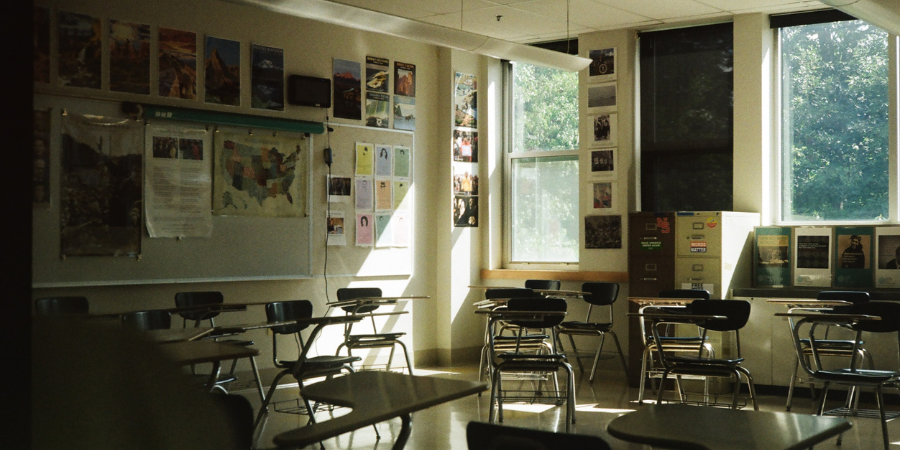
Indoor air quality has become one of those issues school facility teams are asked to manage more carefully than ever, even though most school buildings were not designed with modern standards in mind.
Parents want to know their children are learning in a safe environment. Teachers are paying closer attention to the health of their workplace. And with online conversations making these concerns more visible, the pressure to meet community expectations has increased.
All of this is happening while facility teams are juggling aging HVAC systems, tight budgets, and maintenance or construction work that cannot always wait for school breaks. It is not realistic to expect one system to handle everything in buildings that were designed decades ago.
The good news is that, these days, improving air quality doesn’t mean starting your entire infection control strategy over from scratch. With the right support tools in place, your school can support safe and healthy air quality where it matters most without disrupting teachers, students and staff.
Poor Air Quality Creates Real Risks in Classrooms
Classrooms are one of the most difficult environments to manage from an air quality standpoint. They are occupied for long stretches of the day, often at full capacity, and ventilation performance can vary from room to room. Over time, this creates conditions where airborne issues build quietly in the background.
In many schools, air quality concerns develop gradually. Dust, allergens, and moisture accumulate, especially in older buildings, even when HVAC systems are maintained. Some rooms consistently feel less comfortable than others, which is often a sign that airflow and filtration are not keeping up with how the space is being used.
Maintenance and repair work can add to the problem. Opening ceiling tiles or accessing mechanical systems releases fine particles directly into occupied areas if they are not controlled. Without added protection, those particles spread beyond the work zone and affect nearby classrooms and shared spaces.
Facility teams usually notice problems through patterns rather than incidents. Lingering odors, dust that returns quickly, recurring comfort complaints, and higher absenteeism in specific areas all point to gaps in air quality management. Recognizing these patterns early creates an opportunity to address issues before they escalate.
Discover how schools use daily air quality controls alongside filtration here.
Many HVAC Were Never Built to Handle Today’s Air Quality Expectations

HVAC systems are the foundation of air quality in school buildings, but they were not designed to manage every challenge schools face today. Many systems prioritize temperature control, with limited ability to capture fine airborne particles. Outdoor air intake is often restricted to manage energy use, and filtration performance varies based on equipment age and maintenance schedules.
Even when systems are operating as intended, air quality still fluctuates throughout the day. Occupancy shifts, doors open and close, weather conditions change, and maintenance work takes place. As a result, some rooms perform well while others consistently struggle, even within the same building.
This is why passing inspection does not always translate to classrooms feeling healthy day to day. HVAC provides a baseline, but it cannot always respond to localized issues or temporary disruptions. Guidance from organizations like the EPA and ASHRAE reflects this reality by recommending layered approaches that support ventilation with additional controls where risks are highest.
Infection Control Tools Are a Powerful First Line of Defense
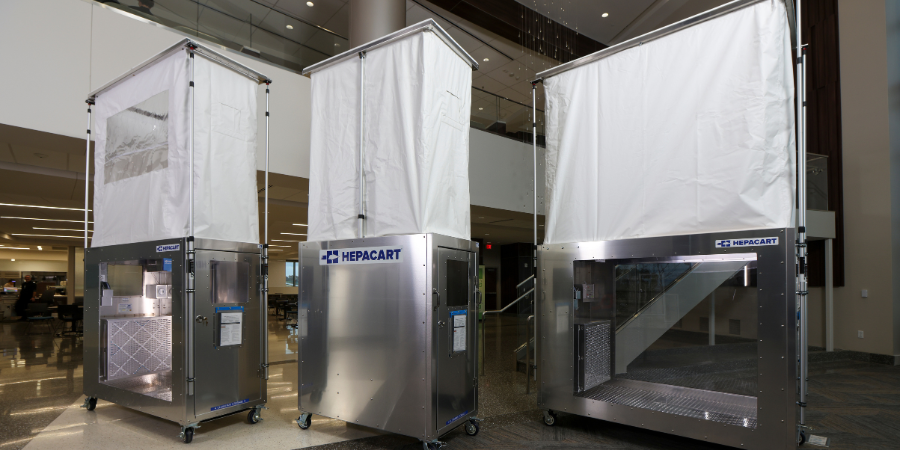
When HVAC systems reach their limits, infection control products give facility teams practical options for addressing air quality challenges without overhauling the building. These tools support existing systems by focusing protection where problems tend to appear first.
Portable HEPA Filtration for Everyday Classroom Air
Portable HEPA filtration is one of the most effective ways to improve classroom air on a day-to-day basis. These units continuously capture fine particles such as dust, allergens, and airborne contaminants that contribute to illness spread. They are especially helpful in nurse offices, special education classrooms, and rooms that generate recurring complaints.
Because portable units can be placed exactly where they are needed, they allow facility teams to respond quickly. Instead of waiting for long-term system changes, air quality can be strengthened in problem areas as soon as issues appear.
Mobile Containment Carts for Maintenance and Repair Work
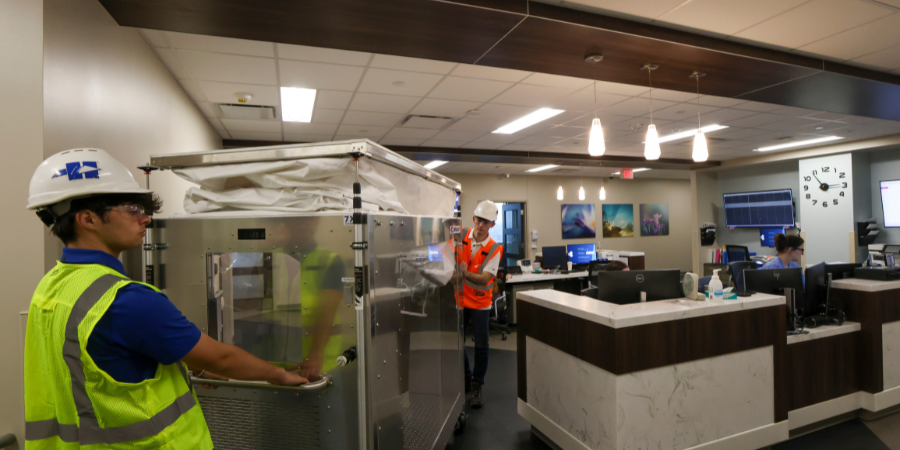
Maintenance and repair work introduces a different type of air quality risk. Tasks involving ceiling access, cabling, or mechanical systems release dust directly into occupied spaces if not properly controlled.
Mobile containment carts help manage this risk by capturing particles at the source. Built-in HEPA filtration supports negative air containment, allowing work to continue during school hours without spreading contaminants into surrounding areas.
Shop HEPACART® Mobile Containment Carts today.
Temporary Wall Systems for Renovations and Long-Term Projects
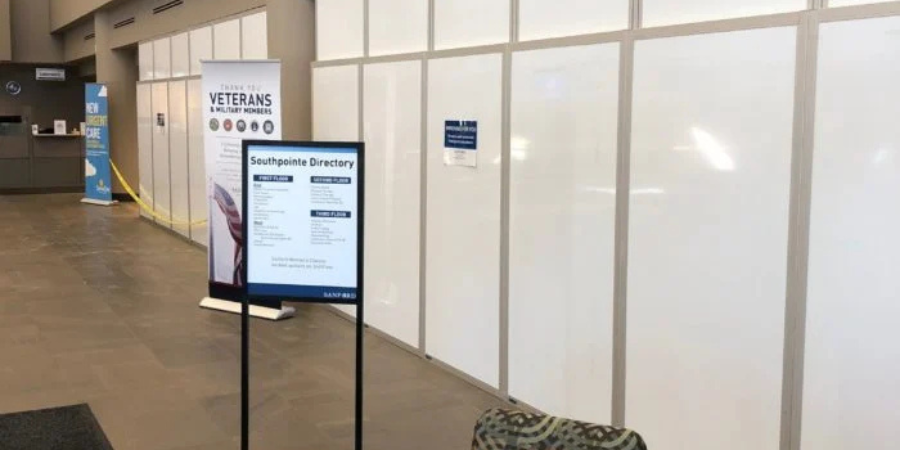
For larger renovation projects, physical separation becomes critical. Temporary wall systems create solid barriers between work zones and occupied areas, helping contain dust and debris while reducing noise and disruption.
These systems are especially useful for long-term or phased projects where parts of the building must remain operational. They help protect indoor air quality while maintaining a controlled, professional work environment.
Shop STARC® modular wall systems today.
When Schools Take a Layered Approach to Air Quality, Everyone Wins
When used as part of a layered approach, infection control products give facility teams more control and fewer surprises. Portable filtration helps reduce airborne particles that irritate respiratory systems and contribute to illness spread. Containment tools prevent routine maintenance or construction from turning into building-wide air quality problems.
These tools are most effective in spaces that experience higher traffic or greater sensitivity, such as gyms, band rooms, libraries, labs, and nurse offices. By stabilizing air quality in these areas, schools can reduce complaints, support healthier attendance, and maintain more consistent learning environments.
Rather than relying on one system to handle every condition, layered protection allows air quality improvements to be targeted, flexible, and easier to manage over time.
How to Choose the Right Infection Control Solutions for Your School
.png?width=900&height=450&name=Blog_SchoolSetting_900x450%20(1).png)
Choosing the right tools starts with understanding where air quality issues are already showing up. In most schools, a small number of rooms generate the majority of concerns. Paying attention to those patterns makes it easier to prioritize solutions without stretching budgets or staff.
Facility teams should ask practical questions. Are certain classrooms consistently generating complaints? Does maintenance work regularly disrupt learning spaces? Are renovations planned while the building is occupied? Do illness patterns spike during specific seasons? The answers usually point to where support is needed first.
Portable HEPA filtration is often the best starting point for everyday classroom concerns. Mobile containment carts are well suited for schools with frequent maintenance work. Temporary wall systems are most effective for larger renovation projects. Matching the right tool to the right situation allows steady improvements without trying to solve everything at once.
Discover more practical daily guidance to improve your school facility’s indoor air here.
Your 2026 Step-by-Step Guide to Improving School IAQ
A strong air quality strategy usually starts with paying attention to what the building is already telling you. Small, repeat issues often provide the clearest insight into where air quality support is needed most. By focusing on patterns, priorities, and consistency, facility teams can make practical improvements without adding unnecessary complexity.
- Start by tracking patterns, not isolated complaints.
Pay attention to lingering odors, recurring dust buildup, temperature complaints, or comfort issues that show up in the same rooms or wings. Writing these down helps identify areas that need consistent support rather than one-time fixes. - Identify priority spaces first.
Nurse offices, special education classrooms, high-traffic rooms, and areas near maintenance activity are often the best places to focus early. Improving air quality in these locations typically leads to noticeable results without needing building-wide changes. - Keep maintenance and filtration routines consistent.
Regular filter replacement, equipment cleaning, and proper containment during maintenance work help prevent small air quality issues from becoming larger problems over time. - Watch absentee and seasonal trends.
Increases in illness or complaints during certain times of year can signal when additional air quality support is needed, especially in high-risk areas. - Document what you are doing.
Clear records make it easier to communicate improvements to administrators, respond to parent concerns, and demonstrate that air quality is being managed proactively.
Looking for more tips and best practices to protect air quality standards? Start here.
Cleaner Air Is One of the Most Practical Safety Improvements Schools Can Make
Most school buildings were not designed with today’s air quality expectations in mind. That reality does not mean improvement is out of reach. A layered approach that supports existing HVAC systems with targeted infection control tools gives schools a practical path forward.
Portable HEPA filtration strengthens everyday classroom air. Mobile containment protects occupied spaces during maintenance. Temporary wall systems reduce risk during renovations. Together, these tools help facility teams stay ahead of issues instead of reacting to them.
If you are looking for a clear starting point, the Ultimate Guide to Indoor Air Quality breaks down how these solutions work together and how to apply them in real school environments.

Share this
