
Share this
by HEPACART on Dec 22, 2025
Construction inside active hospitals has never been more complex. Every healthcare facility project these days happens under tighter regulations, more limited budgets, and the constant pressure to protect patients and staff.
Yet many teams still rely on the standard drywall and plastic barriers. These materials were never built for modern healthcare settings. They are loud, dusty, and disposable, creating more problems than they solve for the hospitals and medical centers that use them.
When compliance, reputation, and patient comfort all matter, these short-term fixes simply do not hold up. Temporary wall systems were created out of the need for a better option, and facility managers are quickly discovering that they are the cost-effective and long-term solution they’ve been looking for.
6 Warning Signs That Your Containment Is Not Working
But how can you tell when your current containment setup is holding you back?
Certain red flags often appear early in a project and can alert you to a need for stronger containment:
- Staff and patients may notice dust, odors, or noise coming from the construction zone.
- Negative air alarms may begin tripping more often than they should.
- Inspections might uncover small leaks where dust and debris are escaping containment.
- Cleanup times become longer than expected as crews deal with leftover dust and debris.
- HVAC filters need to be replaced more frequently due to the increased particulate load.
- Project turnover slows as containment issues create delays in scheduling and approvals.
These issues may be indicators that your containment strategy is no longer meeting modern infection control standards. If you’re noticing 3 or more from this list, it’s time to think about how you can level up your containment strategy during ongoing construction or renovation projects.
The Shortcomings of Traditional Barriers

Drywall and plastic sheeting have been the go-to for years because they are easy to find and familiar to most contractors. But in healthcare construction, familiarity does not always mean fit for purpose. These materials take time to install and even longer to remove, which pushes back project schedules and drives up labor costs. They also do a poor job of sealing off work areas. Even a small gap or weak seam can allow dust and debris to escape into patient areas.
The problems do not stop there. Drywall and plastic offer almost no sound control, which can make nearby patient rooms noisy and uncomfortable during construction. Fire resistance is another concern, especially when inspections are tight and safety requirements keep getting stricter.
At the end of the project, everything gets torn down and thrown away. That means paying for materials, labor, and disposal over and over again. What looks inexpensive at first quickly becomes a repeating cost cycle that wastes both time and resources.
Next-Generation Containment for Real-World Healthcare
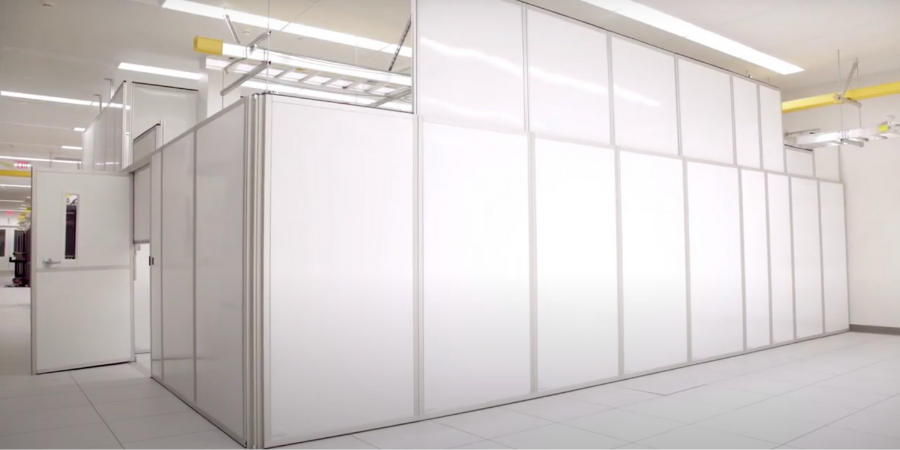
Modern temporary wall systems were built to solve the same problems that drywall and plastic create and to make a facility manager’s job easier. Instead of starting from scratch with every project, modular panels lock together quickly and seal tightly, cutting setup time and keeping noise and dust under control.
Each wall section connects with precision-fit seams that integrate directly with other powerful containment and filtration equipment, like the HEPAFORCE® AIR NEGATIVE Air Machine & Scrubber or the HEPAFORCE® GermBuster Room Air Purifier. This means you can trust containment to hold pressure, pass inspections, and keep debris out of patient areas.
The panels are durable, cleanable, and built for reuse, helping facilities save on both materials and labor. They also build confidence with clinical staff by providing a professional, finished look that signals infection control is being handled correctly.
What to Consider When Choosing a Wall System

Selecting the right containment system starts with understanding the environment where it will be used. Every space has different infection control needs, and the right setup depends on both the work being done and how close it is to patient care.
When evaluating a system, look at:
- ICRA Classification: Confirm the level of containment required and ensure the system can support it.
- Integration: Verify compatibility with negative air machines and HEPA filtration units already in use.
- Safety Features: Check for sound reduction and fire resistance that meet inspection standards.
- Ease of Maintenance: Consider how quickly panels can be cleaned, stored, and redeployed.
- Professional Appearance: Choose panels that present a clean, finished look to maintain confidence among staff and patients.
- Cost Efficiency: Divide the system’s total investment by expected reuses to find the true cost per project.
Temporary Wall Systems: The Infection Control Trend Built for the Future
Modern temporary wall systems are changing how healthcare construction gets done. They are built for today’s demands of faster timelines, tighter regulations, and zero tolerance for airborne contamination. The best systems combine safety, flexibility, and cost efficiency so facility teams can get projects finished without compromising patient care or compliance.
Safety and Compliance You Can Count On
Every healthcare renovation starts and ends with infection control. Modern wall systems make that job easier. Fire-rated materials, precision-fit seams, and sound-dampening panels work together to protect patients, maintain negative air pressure, and meet ICRA standards.
Because these systems integrate with existing negative air and HEPA filtration units, you can trust containment to hold pressure and pass inspection on the first try. Durable, cleanable panels are designed for repeated use, keeping facilities inspection-ready and limiting downtime between projects. For facility managers, that means fewer headaches, less risk, and more control over the work environment.
Savings That Go Beyond the Budget Line
Reusable panels are not just a smarter safety choice; they are a smarter financial one. Instead of paying for new drywall and plastic on every project, facilities can redeploy the same system again and again. The savings add up quickly in labor, materials, and disposal fees.
If you want to see the real return, divide the system’s total cost by the number of projects you plan to use it on. The cost per project is almost always lower than disposable options, especially when you factor in fewer shutdowns and faster project turnover. In the long run, modular containment helps protect both your budget and your reputation.
Built to Adapt to What Comes Next
Healthcare construction is not getting any easier. Regulations are tightening, sustainability goals are expanding, and expectations for patient comfort are higher than ever. A modern temporary wall system gives you the flexibility to adapt instead of scrambling.
Ask yourself:
- Can your current containment setup meet the next ICRA update?
- Could it support an emergency repair or a future expansion?
- Does it integrate with the negative air and filtration equipment you already depend on?
If the answer is yes, you are not just ready for your next project. You are ready for whatever the future may hold, too.
The Future of Healthcare Construction Starts Here
Temporary wall systems have evolved far beyond the quick fixes of the past. They are now powerful tools for any facility managing construction in occupied healthcare spaces. Designed for speed, safety, and compliance, they help teams work efficiently while protecting both patients and staff.
Download the HEPA vs. ULPA Guide to see how containment and filtration strategies work together to keep your facility ready for what comes next.

Share this
